
Among the first-time home seller mistakes to avoid in El Cajon, overpricing stands out. An asking price that ignores comparable sales, your home’s condition, location, and features can discourage buyers. Recent sales of similar nearby homes offer a stronger starting point than the amount you hope to receive. The goal is to protect your sale price without pricing your home out of consideration.
Repairs and presentation shape a buyer’s impression, and selling your first home can make every decision feel personal. This guide explains how to weigh repairs against their likely value, prepare for showings, choose representation, disclose known issues, and set a price grounded in the property and local comparisons. A strong asking price is not simply the highest one you can put on the listing. It is a strategy based on evidence and the features buyers can see.
Key Takeaways
- Prioritize visible repairs and weigh larger projects against your home’s condition and selling strategy before investing.
- Prepare rooms and outdoor spaces so listing photos show your home clearly and buyers can picture its use.
- Compare an agent’s pricing approach, marketing plan, and representation terms before deciding how to sell.
- Document and disclose known property issues carefully to reduce the risk of disputes after closing.
- Set your asking price using comparable sales and your home’s specific features, then pay attention to buyer feedback.
Table of Contents
1. How Can You Address Repairs or Offer Repair Credits?
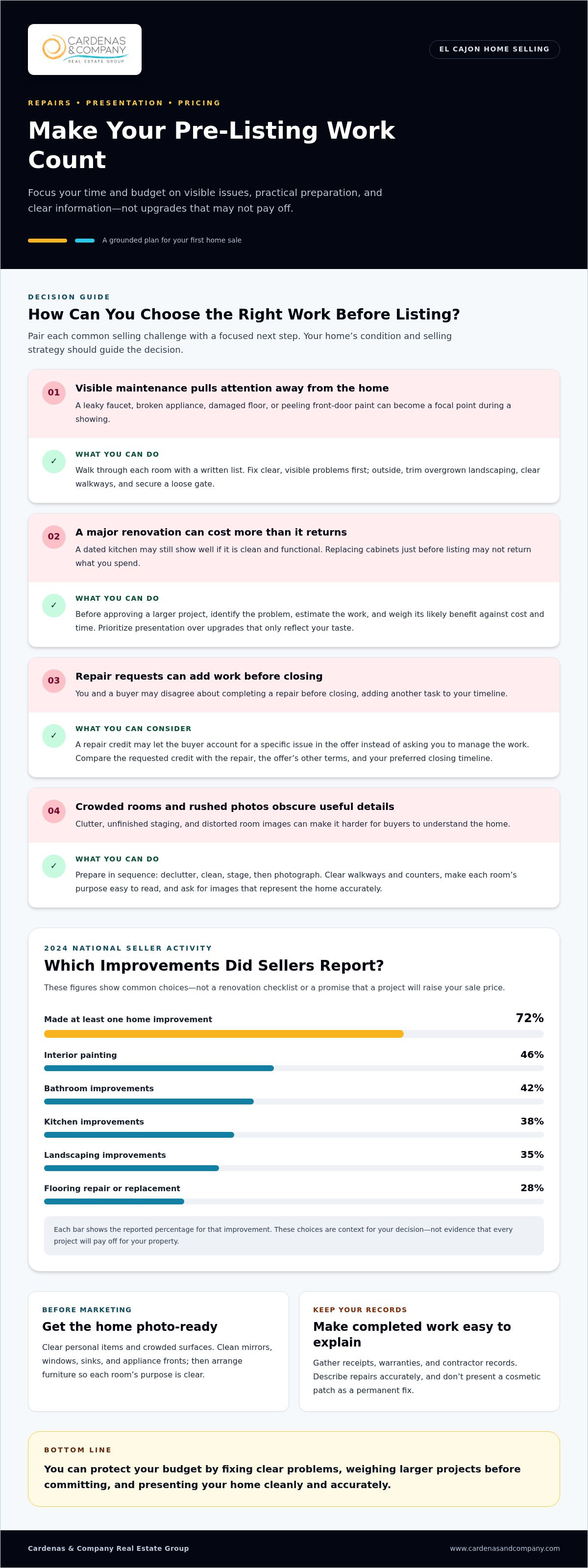
Before listing your El Cajon home, distinguish visible maintenance from major renovation. A leaky faucet, broken appliance, or damaged floor can become a focal point during a showing. Fixing these obvious issues can help your home feel cared for and reduce distractions. Walk through each room with a written repair list, then address the small, clear problems first.
Look outside, too. Trim overgrown landscaping, clear walkways, and fix a loose gate or peeling front-door paint. These targeted steps improve the first impression without requiring a full exterior overhaul. Inside, patch conspicuous wall damage and replace visibly worn carpet if it distracts from the room. Prioritize work that improves presentation over upgrades that reflect only your personal taste.
National seller activity offers context, not a renovation checklist for your property. In 2024, 72% of sellers made at least one home improvement before selling. Interior painting was reported by 46%, kitchen improvements by 38%, flooring repair or replacement by 28%, bathroom improvements by 42%, and landscaping improvements by 35%. Those figures show common choices, not a guarantee that each project will raise your sale price.
Before approving a larger project, identify the problem, estimate the work, and compare its likely benefit with its cost and time. A dated kitchen may still show well if it is clean and functional; replacing cabinets just before listing may not return what you spend. Address serious visible defects, but don’t assume a major renovation will pay for itself. Let your home’s condition and selling strategy guide the decision.
A repair credit may be an alternative when you and a buyer disagree about completing work before closing. It lets the buyer account for an identified repair in the offer instead of asking you to manage the work. Compare the requested credit with the repair itself, the offer’s other terms, and your preferred closing timeline. Keep the discussion focused on a specific issue, such as a faulty appliance, rather than agreeing to a vague allowance.
For a smoother listing, gather receipts, warranties, and contractor records for completed work. Describe repairs accurately, and don’t present a cosmetic patch as a permanent fix. If you’re weighing several projects, rank them by visibility, function, and the concern they could raise during a showing. This keeps your budget realistic and helps you complete purposeful updates before marketing begins.
2. How Can You Present, Stage, Photograph, and Market Your Home Effectively?
In El Cajon, prepare your home in sequence: declutter, clean, stage, then photograph it before marketing begins. Work backward from your planned listing date, allowing each task to finish before the next starts. This keeps boxes, cleaning supplies, and unfinished staging out of listing photos.
Start by clearing items that crowd walkways, countertops, and closets. Pack personal photographs, collections, and paperwork so buyers can focus on the rooms rather than your belongings. In a small bedroom, removing an extra chair can reveal usable floor space. In the kitchen, clear most counter items to show the available work surface.
Clean surfaces that appear in close-up photos, including mirrors, windows, sinks, and appliance fronts. Then arrange furniture to make each room’s purpose clear. A dining table belongs in the dining area; a desk can define a spare room as an office. Staging helps buyers picture themselves living there, rather than disguising the home’s size or condition.
Keep staging proportional to the home. Remove excess furniture before adding decorative pieces, and use neutral bedding or simple towels to reduce visual distractions. A bare room can be hard to interpret, while crowded shelves can make it seem smaller. Focus on the living room, kitchen, main bedroom, and entry, where layout and first impressions matter.
Photography comes after cleaning and staging, not before. In 2024, 94% of U.S. home buyers searched for homes online, so the first images shape whether they consider a showing. Open curtains, turn on working lights, and remove cords or bins from camera views. For each room, clear the path between the doorway and its main feature.
In 2024, 62% of buyers wished more home listings featured 3D tours. A virtual tour can help buyers understand how rooms connect, while clear still photos show finishes and details. Ask for images that represent the home accurately. Wide-angle shots that distort room size can create mismatched expectations once buyers arrive in person.
Build the marketing package around the home’s real strengths, such as a functional floor plan, natural light, or a usable patio. Don’t rely on upgrades alone to attract attention, and don’t treat polished staging as a fix for overpricing. These common mistakes pull attention away from the property’s actual value. A clear preparation plan helps you coordinate cleaning, staging, photography, and launch; listing preparation guidance can help you shape that plan.
3. Should You Hire a Real Estate Agent?
For a California sale, historically reported U.S. real estate commissions have ranged from 3% to 6% of the sale price, but the percentage isn’t fixed. Standard escrow fees typically add to your closing costs as well. These figures are reference points, not a set fee for every transaction when working with professionals like Cardenas & Company Real Estate Group.
Choose representation by comparing the work you need with the work an agent will handle. Ask how the agent will prepare a comparative market analysis, or CMA, comparing your property with similar recent sales. For example, a nearby sale with a different lot, condition, or layout may not support the same asking price.
Review the agent’s online feedback for details about communication, pricing, and follow-through. Ask for a clear explanation of the marketing strategy and how the agent will respond to buyer feedback. You’re hiring judgment as well as task management, so look for specific answers about your home, not a generic promise to get it sold.
Consider the tradeoff of selling without representation. About 7% of sellers in 2025 did not work with an agent at any point during the home-selling process. A 2023 Bright MLS study found that 63% of homes that began as private listings sold only after being listed on the MLS, a listing system used to share properties with real estate professionals. That finding doesn’t decide your choice, but it shows why reach and exposure belong in the conversation.
Professional guidance can also help you assess an offer beyond its headline price. Review financing, contingencies, deposit terms, and timing together. A higher offer with demanding conditions may not serve your plans as well as a more workable one. If an inspection identifies a concern, discuss its effect on negotiations before making a rushed decision. Your agent can help assess early offers rather than dismissing them based on emotion or an assumed better offer later.
Before signing an agreement, read its services, duration, and compensation terms carefully. Ask the agent to explain any phrase you don’t understand, including what happens if your plans change. A clear agreement lets you compare representation on its actual terms. Candid conversations about pricing, preparation, and marketing can help you decide whether professional support fits your sale.
4. Disclosing known property defects
Complete your California disclosures carefully and describe known property issues accurately. California sellers can have significant disclosure obligations, so failing to report a known defect may lead to liability if a buyer discovers it after closing.
For work completed without permits, disclose what you know about the project and its permit status. Describe the work plainly, such as an added room or altered plumbing, and gather related plans, invoices, and contractor records for the transaction.
Start with a room-by-room review and record facts, not guesses. Note a roof leak you repaired, a window that sticks, or recurring moisture near a bathroom. Include when you noticed the issue, what you did, and any records you have. If you don’t know the cause, state what you observed rather than offering a diagnosis.
Separate completed repairs from unresolved conditions. A patched ceiling, for example, may hide an old leak without showing whether the source was fixed. Keep repair invoices, inspection reports, warranties, and correspondence together so you can answer questions consistently. Help buyers understand the home’s history, not just its cleanest details.
For wildfire, flood, and other local risks, disclose known property conditions and past events that affected your home. If water entered a garage, smoke damaged an exterior surface, or runoff changed the landscaping, describe what happened and any work completed. This gives buyers information to use when assessing the property.
Don’t treat a neighborhood risk as proof that your home suffered damage, and don’t claim a property has no risk based on appearance alone. Distinguish what you personally observed, what records show, and what remains unknown. Clear wording helps prevent a broad statement from being mistaken for a specific inspection or guarantee.
Use a consistent process before you complete disclosure forms:
- Review each room, exterior area, and major system for known problems.
- Match each issue with available dates, invoices, reports, or repair notes.
- Describe the condition and your response in plain, factual language.
- Keep a copy of the completed forms and supporting records.
If you discover another issue after completing forms, address it promptly through the transaction process instead of assuming the earlier paperwork covers it. A buyer may ask follow-up questions about a disclosed item; answer based on your records and direct observations. Accurate, consistent disclosures give both sides a clearer basis for discussing the home’s condition and sale terms.
5. Pricing based on comparable sales and property-specific features
Your asking price should start with comparable sales, not your preferred outcome. A comparative market analysis weighs recent nearby sales against your home’s location, condition, layout, and features. In El Cajon, a larger lot may not compare directly with a nearby home that has less outdoor space but a remodeled interior.
Choose comparisons that resemble your property in ways buyers notice. Review location, lot size, living area, bedroom count, condition, and sale timing. A home across a major road may attract different buyers from one on a quieter street, even with a similar floor plan. The closer the comparison, the more useful it is.
Account for differences instead of treating every sale as a match. A renovated kitchen, newer appliances, or maintained exterior can distinguish one property from another. A dated bathroom or worn flooring can also affect how buyers judge value. Upgrades matter when they improve a feature buyers can see and use, not simply because you paid for them.
Don’t set your price by adding renovation receipts to your preferred sale amount. The market responds to your home’s current condition and competing options, not your project ledger. A new appliance may improve function, while a costly custom finish may appeal to fewer buyers. Consider each feature for its relevance, not its personal value.
Overpricing can keep a home on the market longer, discourage buyers, and ultimately contribute to a lower sale price. That’s why pricing belongs near the top of your first-time home seller mistakes to avoid in El Cajon checklist. Attractive photos or a fresh exterior won’t close a gap between your asking price and comparable homes without a clear reason.
Before listing, review the comparison set and identify what supports your price. Separate similar homes from weaker matches, then explain differences in condition, layout, lot, and included appliances. If buyers show limited interest or repeatedly raise price concerns, take that feedback seriously. Reassessing promptly keeps your strategy aligned with buyer response.
Keep the closing in view, too. Your goal is a successful sale on workable terms, not simply the highest initial asking price. Comparing the evidence behind your price is one of the first-time home seller mistakes to avoid in El Cajon, because an unsupported number can narrow interest before negotiations begin.
Discuss your El Cajon home pricing strategy
Cardenas & Company Real Estate Group: Residential Listing Services
Cardenas & Company Real Estate Group offers Residential Listing Services for your El Cajon sale. Turn to the team for guidance on weighing comparable sales, preparing your home for listing, and considering offers against your timing and goals.
You bring the details that make your property yours; a clear selling strategy connects them to pricing, presentation, and buyer interest. If your plans include buying another home or evaluating a property as an investment, Buyer Representation Services or Real Estate Investment Consulting may also fit your next step.
If you’d like to discuss your home sale, contact Cardenas & Company Real Estate Group or visit Cardenas & Company Real Estate Group online.
Plan Your Sale Around What Comes Next
Your sale is also the starting point for your next decision. If you’re buying another home, relocating for military service, or changing how you hold property, connect the timing of your sale with that next move. Cardenas & Company Real Estate Group offers Residential Listing Services, Buyer Representation Services, and Military Relocation Services for these distinct needs.
A measured plan can help you avoid first-time home seller mistakes to avoid El Cajon without letting the transaction take over every decision. Set your priorities early: the timing you need, the terms you can accept, and what a successful transition looks like for you. These priorities give every conversation about your home a practical purpose.
If you’d like to discuss your next step, reach out at your own pace, without pressure.
Contact Cardenas & Company Real Estate Group
Selling your home marks a meaningful change. A clear plan can help you move forward with confidence.
Frequently Asked Questions
What is one of the biggest mistakes to avoid when selling a home?
Overpricing is one of the biggest mistakes because it can keep qualified buyers from considering your home. In El Cajon, compare your asking price with recent sales that share meaningful features, not just nearby addresses. If showings draw little interest or visitors repeatedly question the price, treat that response as useful information. Revisit the comparisons and your strategy rather than assuming more time alone will solve the problem.
What are the most common mistakes first-time home sellers make?
First-time sellers can let emotional attachment shape decisions that call for clear business judgment. That may mean rejecting an early offer without reviewing its terms or treating a buyer’s repair request as personal criticism. Before responding, write down your priorities, such as move timing or certainty of closing, and compare each offer against them. A simple decision framework helps you stay consistent when negotiations become stressful.
How should El Cajon homeowners price a home for sale in 2026?
Start with recent closed sales, then adjust for differences that matter to buyers. In El Cajon, compare lot usability, floor plan, condition, and street setting. An active listing shows the competition, not what a buyer actually paid. Ask how each comparison supports the recommended price. This grounds your pricing decision in evidence and gives you a clear way to reassess if buyer response doesn’t meet expectations.
What home repairs and improvements are worth doing before selling in El Cajon?
Choose work that solves a visible problem or restores basic function. For example, repair a door that won’t close, replace a cracked switch plate, or clear a blocked drain before showings. Then weigh larger improvements by their scope, disruption, and relevance to the home’s condition. A practical improvement plan separates necessary maintenance from optional upgrades, so you don’t spend on a project just because it suits your preferences.
What California disclosures and documents must home sellers provide?
California sellers have significant disclosure obligations, so complete disclosures carefully using what you know about the property. Organize relevant records, including permits, renovation invoices, warranties, inspection reports, and repair documents. These records can help you describe past work precisely instead of relying on memory. The documents relevant to your sale depend on the property and transaction, so treat each disclosure question as a request for accurate information.
How should sellers compare offers, contingencies, and financing in California?
Compare the full offer, not just the purchase price. Review financing, contingencies, deposit terms, and timing together, then consider how each term affects your plans. A contingency is a condition that must be met for the transaction to proceed as written. For example, a longer closing timeline may conflict with your next move, even if the offer price is attractive. Put each offer’s terms side by side before choosing.
Should El Cajon sellers use a real estate agent or sell without one?
Choose based on the work you can confidently manage and the support you want during negotiations. Selling without an agent means handling tasks such as pricing analysis, marketing coordination, offer review, and transaction communication yourself. An agent can provide representation and help organize those steps. Before deciding, list the responsibilities you’ll take on, then assess whether you have the time and experience to manage each one alongside your other commitments.
Disclaimer
The information provided on this blog is for educational and informational purposes only and does not constitute legal, financial, or investment advice. While we strive for accuracy, real estate markets and insurance regulations (including Living Trusts and IUL strategies) are subject to change. David Cardenas (DRE 01862173) is a licensed real estate salesperson; however, this content does not create an agency relationship. Please consult with a qualified attorney or tax professional regarding your specific situation.