
What if the smartest first step after buying a San Diego home is not planning an upgrade, but learning what the property needs? A new homeowner checklist San Diego buyers can use should start with the home’s condition, essential records, and safety priorities, not a generic renovation wish list.
The first weeks can bring a pile of decisions. You may be unsure which systems to check, what documents to keep, or how to sort insurance, HOA, and utility questions without feeling behind.
A clear plan helps. This guide breaks the first 90 days into manageable steps so you can organize records and services, identify property-specific maintenance and safety needs before spending on upgrades, and set priorities for your first year. We’ll cover urgent checks and ownership basics, then San Diego-specific considerations such as utilities, HOA responsibilities, insurance questions, and property tax paperwork to verify. You don’t need to solve everything at once. The goal is a steadier start and a plan shaped around your home.
Key Takeaways
- Start with the first-day essentials: secure access, learn the home’s key systems, and gather closing documents.
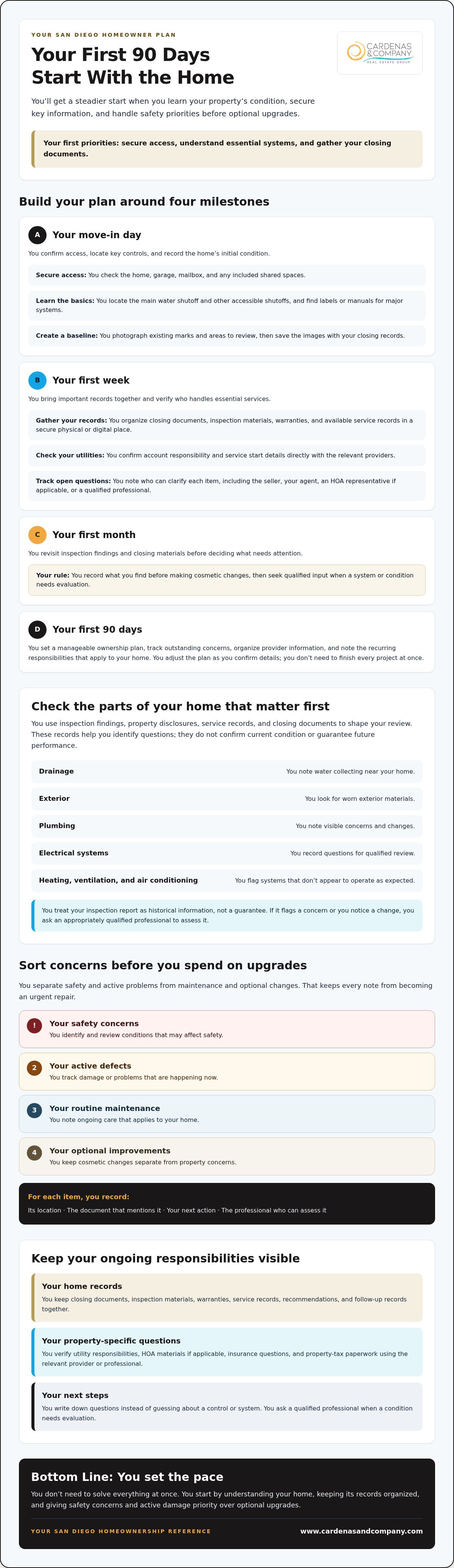
- Use a new homeowner checklist San Diego plan to pace tasks across move-in day, the first week, first month, and first 90 days.
- Review inspection findings and property records before prioritizing checks for drainage, exterior condition, plumbing, electrical systems, and HVAC.
- Compare safety concerns and active damage with time-sensitive maintenance and optional upgrades before deciding what to address first.
- Organize home documents, service records, warranties, HOA materials if applicable, and professional contacts so ongoing responsibilities are easier to track.
Table of Contents
What should you handle first after buying a San Diego home?
Start with three priorities: secure access, understand the home’s essential systems, and organize your closing documents. This order helps protect the property, gives you a starting point if an issue comes up, and makes key information easier to find before the boxes are unpacked.
A new homeowner checklist San Diego residents can use should be a flexible guide, not a fixed schedule for every property. Your inspection findings, closing records, property type, and the home’s current condition determine which tasks deserve attention first. Before painting, replacing fixtures, or planning cosmetic changes, photograph existing marks and note areas you want to inspect more closely. This gives you a baseline and keeps appearance upgrades separate from property concerns.
Which tasks belong on your move-in-day checklist?
Confirm that you can access the home, garage, mailbox, and any shared spaces included with the property. Locate the main water shutoff and other accessible shutoff points, and look for labels or manuals for major systems. If you’re unsure what a control does, write down the question and ask a qualified professional rather than guessing.
Photograph the home’s initial condition, including existing marks or areas that need a closer look. Save the images with your closing records. Knowing what the property includes can also help you understand real property and its components, but questions about your specific ownership documents should go to the appropriate professional.
What should you organize during your first week?
Bring your closing documents, warranties, inspection materials, and available service records together in a secure physical or digital location. Confirm utility account responsibility and service start details directly with the relevant providers, since arrangements can vary by property and provider.
Keep a list of open questions. Note who can clarify each item, whether that’s the seller, your agent, an HOA representative if the home belongs to one, or a qualified professional. For context on the purchase process and local considerations that may inform your records, see this San Diego homebuying guide.
During your first month, revisit the inspection report and closing materials, then sort questions into safety concerns, active damage, maintenance, or optional improvements. Record your findings before making cosmetic changes, and seek qualified input when a system or condition needs evaluation.
By your first 90 days, use what you’ve learned to set a manageable ownership plan. Track outstanding concerns, organize records and provider information, and note recurring responsibilities that apply to your home. Adjust the plan as you confirm details. The goal isn’t to finish every project, but to know what matters and what can wait.
Which San Diego property checks help you avoid preventable surprises?
Before you build a maintenance list, compare your inspection findings with property disclosures, available service records, and other closing documents. These records offer a useful starting point, but they don’t confirm the home’s current condition or guarantee how a system will perform in the future. Use them to identify questions that need a fresh, property-specific review.
For a practical new homeowner checklist San Diego buyers can tailor to their home, review drainage, the exterior, plumbing, electrical systems, and heating, ventilation, and air conditioning (HVAC). Note visible concerns, such as water collecting near the home, worn exterior materials, or a system that doesn’t appear to operate as expected. Ask a qualified inspector or contractor to assess conditions and recommend repairs. This list is a starting point, not a substitute for professional evaluation.
How can you turn inspection findings into a first-month plan?
Sort inspection notes into four groups: safety concerns, active defects, routine maintenance, and optional improvements. For each item, record its location, the document that mentions it, the next action, and the professional who can assess it. This creates a clear path from a finding to a decision without turning every note into an urgent repair.
Use the report as historical information, not a guarantee. If it flags a concern, or if you notice a change since the inspection, ask an appropriately qualified professional to assess it. Keep recommendations and follow-up records with the home’s documents so you can track what has been addressed.
What local conditions should you verify for your specific property?
Location can change which questions deserve attention. A home near the coast may prompt questions about exterior wear; a hillside property may call for closer attention to drainage; and nearby vegetation may lead you to ask about wildfire exposure and appropriate maintenance. These are reasons to investigate, not conclusions about your home’s condition or risk.
Review disclosures and any HOA materials for shared systems, restrictions, and owner responsibilities. If your home’s setting raises repair or maintenance questions, San Diego County’s San Diego homeowner programs page may help you identify relevant homeowner resources. Confirm program details and eligibility with the County.
Confirm utility service and account details directly with San Diego Gas & Electric (SDG&E), where applicable. For system or repair questions, rely on qualified professionals rather than assuming a past inspection covers current conditions. If you want to discuss how property-specific findings fit into your ownership priorities, you can learn about Cardenas & Company Real Estate Group, a real estate resource that does not provide contractor assessments or repair recommendations.
How do you separate urgent repairs from optional home upgrades?
Use evidence, not anxiety, to set priorities. Review inspection findings and visible conditions, then ask a qualified inspector or contractor to assess concerns you can’t evaluate yourself. A checklist helps you organize questions, but it can’t reveal hidden defects or set a repair schedule.
For each concern, compare what you know, what could happen if you wait, and what a qualified professional recommends. The right next step depends on the property and the available evidence.
| Priority |
Evidence and possible effect of delay |
Professional input |
Next step |
| Safety concern or active damage |
A report or visible condition points to a possible hazard or ongoing damage. Delay may allow a confirmed problem to continue or worsen. |
Ask an appropriately qualified professional to assess the specific concern. |
Record the assessment and follow-up recommendation; act according to that guidance. |
| Time-sensitive maintenance |
A report, service record, or professional recommendation identifies maintenance to address. Waiting may affect a system’s condition or performance. |
Confirm the condition and recommended timing with a qualified professional. |
Track the recommendation and arrange follow-up based on the documented guidance. |
| Discretionary upgrade |
The project reflects a preference, such as changing finishes, rather than a documented defect. Waiting usually delays the improvement, not a verified repair. |
Consult a relevant professional if the change affects existing systems or materials. |
Plan it after you understand the home’s condition, maintenance needs, and project implications. |
Prioritize documented safety concerns and active damage before cosmetic upgrades.
Which home issues deserve prompt professional attention?
Start with findings in the inspection report, visible damage, and advice from qualified professionals. Don’t assign a repair deadline based on a general checklist. Use timing provided by a professional or supported by a property document. For each concern, note who assessed it, what they observed, and what follow-up they recommend. That record helps you make decisions without treating every unknown as an emergency.
When can you plan an upgrade instead of acting immediately?
Keep aesthetic changes and convenience projects on a separate list from documented system or safety concerns. Before committing, consider the project’s purpose, disruption to daily routines, future maintenance, and compatibility with the existing home. Revisit optional work once you understand the property’s condition and recurring responsibilities. This keeps your new homeowner checklist San Diego focused on informed priorities rather than a rushed renovation wish list.
How can you organize San Diego homeownership records and recurring responsibilities?
A simple filing system makes it easier to confirm what was inspected, repaired, or agreed to at closing. Keep digital copies in a secure location, and note where you store any original or formal documents. Use clear folder names so you can find information by topic, not just by the date you received it.
Connect each document to a next action or the contact who can answer questions about it. A warranty, for example, can point to the relevant service provider, while an inspection note can link to a follow-up task instead of sitting unread in a folder.
What documents should you keep easy to find?
Start with a property folder that includes:
- Closing paperwork, property disclosures, and inspection reports
- Warranties, manuals, service records, and repair receipts
- Professional contacts, including the people or companies who assessed or worked on the home
- HOA rules, meeting information, and association contact details, if the property belongs to an association
Store documents so sensitive information is accessible to you but protected from unauthorized access. Keep a brief index of the folder contents and the location of any paper originals. This can save time when a service question or follow-up comes up.
How do you keep property tasks from slipping through the cracks?
Use one calendar or task list to track service reminders, renewal dates, unresolved questions, and follow-ups. Set dates based on the documents or provider guidance that apply to your home, rather than assuming every property shares the same schedule. If a responsibility has no confirmed date, record what you need to verify and who can confirm it.
For property assessment records and account-specific details, check directly with the San Diego County Assessor. Keep the source and date of any information you confirm, and contact the appropriate official office if a record doesn’t match your closing documents. If you’re considering a move in the South Bay, this South Bay San Diego homebuying guide offers local home-search context.
This kind of organization makes a new homeowner checklist San Diego homeowners can maintain over time: a reliable record, a clear next step, and the right contact for each responsibility.
For real estate guidance related to your ownership priorities, you can connect with Cardenas & Company Real Estate Group.
What should your first-90-days San Diego homeowner plan include?
Your first 90 days are a chance to turn what you’ve learned about the home into a practical ownership routine. Keep the sequence simple: document the property’s condition, address verified priorities, organize essential records, and review the responsibilities that apply to your home. You don’t need to complete every improvement during this period.
- Document: Keep inspection notes, photographs, and property-specific questions together.
- Prioritize: Follow up on concerns supported by documents or qualified professional assessments.
- Organize: Connect records with the next action or the right contact.
- Review: Track ongoing responsibilities and confirm details with the relevant provider or official source.
Use this new homeowner checklist San Diego as a framework, then adapt it to your property type, location, household needs, and professional findings.
How should you adapt the checklist to your household and property?
Choose next steps based on what your inspection findings and property documents actually say, along with your household’s needs. A condo owner may need to understand association responsibilities, while a household with a demanding move schedule may need a simpler task system. Confirm local and time-sensitive details with the appropriate source instead of assuming one schedule fits every home.
If you’re settling in after a military move, the San Diego military relocation guide offers additional regional context. Use real estate guidance to inform ownership and future property decisions, not as a substitute for legal, tax, insurance, or technical advice.
Where can you get help with your next homeownership decision?
Bring each question to the right professional. Your real estate agent can help with real estate matters and purchase context; an insurer can address coverage, an attorney can advise on legal questions, a tax professional can explain tax matters, and a qualified contractor or inspector can assess property conditions. Keeping those roles clear helps you get advice suited to the question.
Cardenas & Company Real Estate Group supports buyers and longer-term ownership conversations in San Diego and the South Bay. If you’re considering a future real estate decision, keep real estate questions separate from legal, tax, insurance, and technical matters.
Bottom Line
A steady first-90-days plan doesn’t require a perfect home or an endless project list. Document what you have, follow up on verified priorities, keep records useful, and adjust your plan as you learn more about the property.
Build a steady foundation for your first year
Your first 90 days don’t need to become a race to finish every project. Use your new homeowner checklist San Diego to document the home, follow up on verified concerns, and organize the records and recurring responsibilities that support confident decisions.
Keep safety and active damage ahead of cosmetic upgrades, and let inspection findings, property documents, and qualified professional advice shape your next steps. Your plan should fit your home, location, and household, with legal, insurance, tax, and technical questions directed to the professionals who handle them.
Cardenas & Company Real Estate Group offers buyer representation, military relocation guidance, and homeowner-focused education for people making real estate decisions in San Diego and the South Bay. Whether you’re in San Diego, Chula Vista, Bonita, Del Mar, La Jolla, Otay Ranch, Carlsbad, Coronado, El Cajon, Santee, La Mesa, Lemon Grove, Encinitas, Imperial Beach, Oceanside, Poway, San Marcos, or Escondido, your first steps should be guided by your property’s records and condition.
Take the process one informed step at a time. A clear plan can help your new home feel more manageable as you settle in.
Discuss your homeownership priorities with Cardenas & Company
Frequently Asked Questions
What should a new homeowner do first after closing in San Diego?
First, secure access, locate essential system controls, and organize your closing documents. Confirm you can enter the home, garage, mailbox, and any shared areas, then identify accessible shutoff points and system labels. Photograph the home’s initial condition and save the images with your records. Your new homeowner checklist San Diego plan should reflect the home’s inspection findings and documents, so record questions before starting cosmetic projects.
What should I check during my first week in a new home?
During your first week, gather closing paperwork, inspection reports, disclosures, warranties, manuals, and available service records in a secure location. Confirm utility account responsibility and service start details with each provider. Make a short list of unresolved questions and note who can answer them, such as your agent, seller, HOA representative if applicable, or a qualified professional. Keep digital copies organized and record where you store originals.
Do new homeowners in San Diego need to check for wildfire or coastal risks?
Check which location-specific questions apply to your property, but don’t assume a risk based only on the city or neighborhood. Homes near vegetation, hillsides, or the coast may warrant questions about wildfire exposure, drainage, or exterior condition. This applies across the region, including Chula Vista, Bonita, Del Mar, La Jolla, Otay Ranch, Carlsbad, Coronado, El Cajon, Santee, La Mesa, Lemon Grove, Encinitas, Imperial Beach, Oceanside, Poway, San Marcos, and Escondido. Confirm concerns with appropriate local sources and qualified professionals.
How do I know whether a home repair is urgent or can wait?
Use documented evidence and qualified professional advice to set repair priorities. A reported safety concern or visible active damage deserves assessment rather than guesswork; routine maintenance and optional upgrades can be considered separately. Ask the professional to explain what they observed, the possible effect of delay, and the recommended next step. Don’t assign a repair deadline based on a generic checklist. Keep the assessment and follow-up details with your home records.
What documents should I keep after buying a home?
Keep closing paperwork, inspection reports, disclosures, warranties, manuals, service records, and repair receipts together. If your home belongs to an HOA, include its rules, meeting information, and contact details. Store digital copies securely and note where you keep original or formal documents. An index can link each record to an action or contact, such as a warranty to its provider or an inspection note to a follow-up question.
How can I organize property taxes and other recurring homeowner responsibilities?
Use one calendar or task list for confirmed service reminders, renewal dates, and follow-up questions. Avoid assuming every home has the same deadlines or responsibilities. For property assessment records and account-specific details, check directly with the San Diego County Assessor; confirm tax payment information with the appropriate official tax source. For bills, HOA obligations, or insurance renewals, verify dates and requirements with the relevant provider or organization.
Should I make upgrades before I have lived in my new home for a while?
You can plan upgrades, but consider delaying discretionary changes until you understand the home’s condition, maintenance needs, and how your household uses each space. Address documented safety concerns or active damage first, following qualified professional advice. Then compare optional projects by purpose, disruption, upkeep, and compatibility with the existing home. This approach helps you avoid spending on cosmetic work before you’ve confirmed what the property needs most.
Disclaimer
The information provided on this blog is for educational and informational purposes only and does not constitute legal, financial, or investment advice. While we strive for accuracy, real estate markets and insurance regulations (including Living Trusts and IUL strategies) are subject to change. David Cardenas (DRE 01862173) is a licensed real estate salesperson; however, this content does not create an agency relationship. Please consult with a qualified attorney or tax professional regarding your specific situation.