
You can make a San Diego home sale more manageable by planning for the full timeline, not just the listing date. A traditional open-market sale typically takes 2 to 4 months from listing to closing, and preparation can add 2 to 8 weeks before your home goes on the market. Managing stress when selling a home in San Diego starts with giving yourself room to prepare, make decisions, and adjust as the sale unfolds.
Selling a home involves more than packing boxes. Your home becomes a place to prepare for showings, and offers, inspections, and closing each bring decisions of their own. This guide shares practical ways to declutter and prepare, manage emotional and logistical pressures, and protect time for your well-being. You’ll also learn to set realistic expectations and stay grounded through closing, so each step feels clearer and more manageable.
Key Takeaways
- Break home preparation into manageable tasks, and gather important sale documents before listing.
- Sort sentimental belongings in short sessions and preserve a few meaningful reminders of your time at home.
- Set clear showing routines and give yourself time to review inspection findings before deciding how to respond.
- Protect time for rest, movement, and family so the sale doesn’t take over every part of your day.
- Plan for adjustments to timing and next steps, and focus on the decisions you can control.
Table of Contents
1. Preparing, decluttering, and staging a home
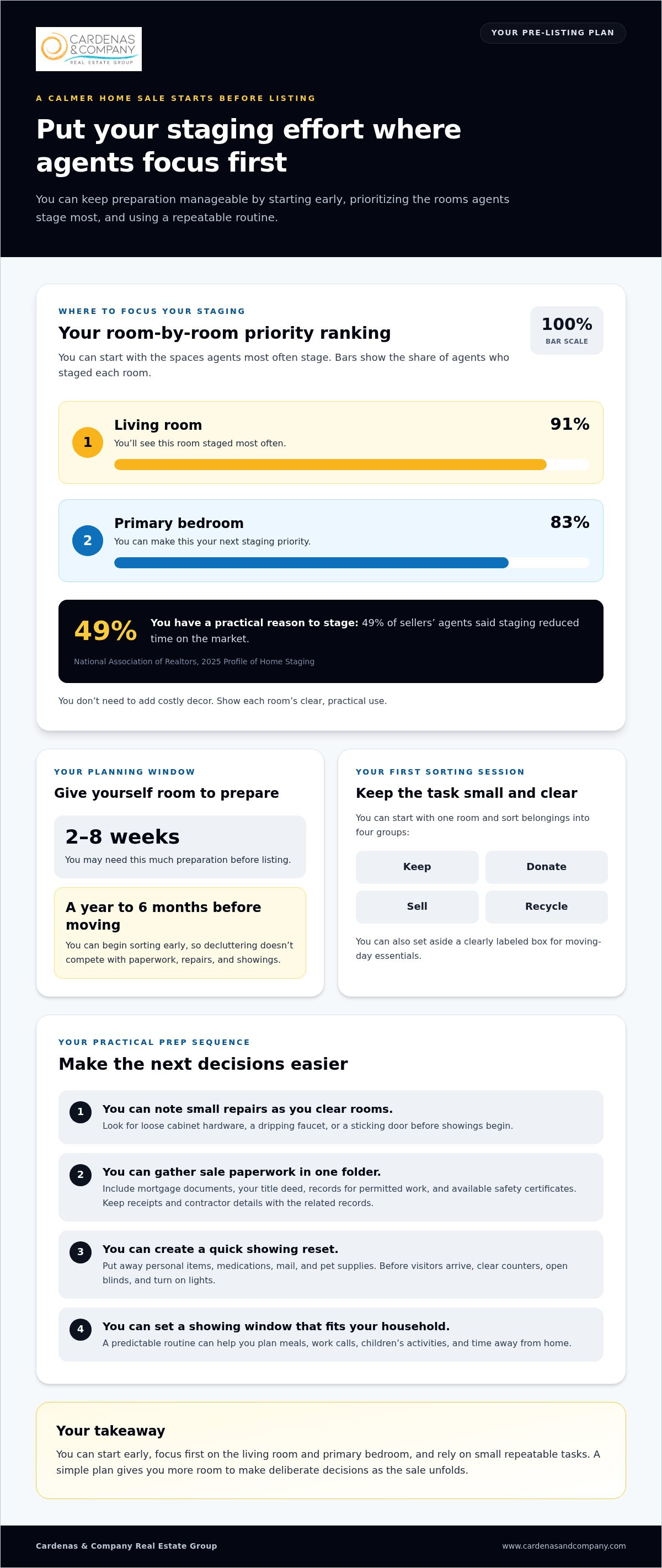
A practical approach to managing stress when selling a home in San Diego starts with your preparation calendar. A traditional sale often requires 2 to 8 weeks of preparation before listing. Begin sorting belongings early, even a year to six months before moving, so decluttering doesn’t compete with your paperwork, repairs, and showing schedule.
Set your asking price using comparable neighborhood sales, competing listings, and local market trends. These factors shape how buyers respond and whether you may need to adjust your plan. They also help you set a realistic preparation schedule instead of rushing to meet an arbitrary listing date.
Start with one room and sort belongings into keep, donate, sell, and recycle groups. Work in short sessions, and set aside a clearly labeled box for moving-day essentials. As you clear surfaces, note repairs such as loose cabinet hardware, a dripping faucet, or a sticking door before showings begin.
Stage your rooms to show their clear, practical use. According to the National Association of Realtors’ 2025 Profile of Home Staging, 49% of sellers’ agents said staging reduced time on the market. Agents staged the living room most often, at 91%, followed by the primary bedroom at 83%. Use those spaces to show how you can use the room, rather than adding costly decor.
Gather your sale paperwork in one folder before listing. Include mortgage documents, your title deed, records for permitted work, and available safety certificates. A pre-sale inspection can flag repairs early, helping you decide what to address before presenting your home to buyers. Keep receipts and contractor details with the related records.
Create a simple showing routine that works for your household. Put personal items, medications, mail, and pet supplies in a designated place before visitors arrive. Keep a short reset checklist near the exit: clear counters, open blinds, and turn on lights. A repeatable routine makes showings easier to manage without making your home feel like a hotel lobby.
Plan for both a quick response and a longer marketing period. Your listing’s first few weekends may bring the most activity, so finish essential repairs and staging before it goes live. If the sale takes longer, maintain your basic showing routine and review feedback alongside your pricing strategy. A written plan helps you make deliberate changes instead of reacting to each quiet day.
2. Preserve meaningful home memories while preparing to sell
Selling your home can feel personal because each room holds familiar routines and important memories. A study found that 72% of respondents rated selling a home as more stressful than buying one. That pressure can rise when buyers comment on the property as a product, while you remember it as the place where your family gathered.
Give your memories a place as you prepare to leave. Choose a few photographs, a handwritten recipe, or a small object tied to a meaningful moment. Put them together in a memory box, then decide which other belongings will move with you. You can preserve your home’s story without keeping every object.
Sort emotionally difficult belongings in sessions of about an hour. Set a timer, choose one drawer or shelf, and stop when the session ends. For example, sort a box of children’s artwork into keep, photograph, and release groups. A clear stopping point helps you make decisions without turning the whole day into one long goodbye.
Use a simple three-question test for sentimental items: Does this object hold a specific memory? Will you use or display it in your next home? Could a photograph preserve the memory instead? Your answers can guide the decision, especially for bulky furniture that may not fit your next space.
Invite family members to share stories while you sort. A child might choose a favorite room photo, while you record the story behind a dented kitchen table. Keep the process respectful: each person can select a few meaningful items, but one person’s attachment doesn’t have to determine what everyone keeps.
Make room for mixed feelings during the sale. You can feel ready to move and still feel sad when buyers walk through your living room. Before showings, put away personal photographs and valuables, then bring them back afterward if that helps your home feel familiar. This small routine separates the sale from your private life.
When feedback stings, separate your home’s presentation to buyers from your history there. A buyer’s preference for different paint or room use reflects their plans, not the value of your memories. Write down the feedback, pause before responding, and discuss practical questions with your realtor instead of treating each comment as a personal verdict.
Mark the transition with a deliberate ritual. Before handing over the keys, take a final walk through the rooms, photograph a favorite detail, or share one last meal at the table. A meaningful goodbye can help you acknowledge what the home meant while making space for your next routine.
If you want help balancing sale decisions with your personal priorities, you can talk through your home sale and next steps. Keep your memory box and moving essentials separate, so the items that matter stay easy to find as you adjust.
3. Stress from showings, offers, inspections, and closing
Set a daily window for showings and keep a simple appointment calendar. A predictable routine helps you plan meals, work calls, children’s activities, and time away from home.
Use virtual tours to let buyers preview rooms remotely, while leaving time for in-person visits. Ask your realtor to group showings where possible, then plan a nearby break, such as coffee or a walk, during the appointment window.
Your seller closing costs in San Diego County depend on your contract, mortgage payoff, escrow and title charges, taxes, and negotiated credits. Review each item in your estimated settlement statement, which lists the funds due at closing and how they are allocated.
An offer with contingencies means the buyer has conditions to satisfy, such as financing or an inspection review. If a condition isn’t met, the buyer may seek a change or withdraw under the contract terms. Even if you sell as-is, inspection findings and negotiations may still arise.
Before each showing, follow a short reset checklist: clear kitchen counters, put away personal items, empty visible trash, and secure valuables. If your children are home, pack a small activity bag so you can leave without searching for toys at the door.
If you have health concerns, plan access around your household’s needs. Share your constraints with your realtor, set appointment windows that fit your routine, and leave extra time between visits for cleaning or airing out rooms.
When an offer feels personal, compare its terms rather than reacting to one headline number. Consider the proposed price alongside financing, contingencies, requested credits, and the buyer’s preferred closing date. This helps you weigh certainty, timing, and potential follow-up work.
After your home inspection, separate documented concerns from cosmetic preferences. Read the report once, note your questions, and give yourself 24 hours after reading it before responding. Then decide which repair requests deserve attention and which terms you want to discuss.
Keep your closing calendar flexible because financing delays can affect the schedule. Buyer financing issues accounted for 23% of delayed U.S. real estate settlements in December 2021. Avoid scheduling every transition task for the same day, and keep your moving plans flexible until your closing date is firm.
From an accepted offer to closing, a traditional sale typically takes 30 to 45 days. Use that period to confirm your moving arrangements, track contract deadlines, and keep important paperwork together. A written list of pending steps makes your mental load easier to manage.
4. Seller self-care and stress management
A home sale can disrupt your routine as you handle cleaning, paperwork, and decisions. Put self-care on the calendar alongside market tasks, not after them. A planned walk or meal gives your day a boundary when real estate starts crowding out everything else.
Start each morning by writing down three sale-related tasks and one personal task. For example, arrange a repair visit, review a document, answer a message, then take a walk. This short list separates urgent work from the long queue of things that can wait.
Choose a realtor by comparing written service plans, communication habits, and proposed compensation. Ask what the fee covers, how showings are arranged, and how you’ll review offers and inspection concerns. Compare the full terms, not just the fee, so you understand the support you’re choosing.
For temporary housing or moving support in San Diego, make a contact list before you need it. Include your employer or military relocation contact if relevant, temporary lodging options, movers, storage, and a trusted friend. Keep dates, costs, and confirmation details together in one place.
Give anxiety a practical outlet. Set aside five minutes to sit quietly and breathe slowly before opening sale messages. If an offer or repair request unsettles you, write down the specific concern, the decision required, and who can answer it. Clear notes can keep feelings from turning into an all-day loop.
Build movement into your schedule. A daily walk can create distance from cleaning, calls, and paperwork. Choose a familiar route through your neighborhood or a nearby park, and keep the appointment even on busy days. Then return to sale tasks with a clear next step.
Protect the evening routine that helps you wind down. Set aside one to two hours before bedtime without sale messages or cleaning tasks. Put your phone away, prepare tomorrow’s short task list, and leave documents in one folder instead of carrying them mentally into bed.
Make room for your household’s feelings, too. Agree on a simple check-in over dinner, and ask each person to name one concern and one next action. If you’re moving with children, preserve a familiar activity, such as a bedtime story or regular family outing.
Adjust your plan when the sale changes pace. A quieter market week doesn’t require you to refresh listing messages every few minutes. Choose set times to review updates, keep one personal commitment each day, and remember that sadness after moving often settles within 2 to 6 weeks.
5. Setting realistic expectations and staying flexible
Your sale has several moving parts, so build a calendar with separate dates for listing, offers, closing, and moving. A traditional open-market sale typically takes 2 to 4 months from listing to closing. Treat that range as a planning frame, not a promise about your specific calendar.
The time on market can vary, and a traditional home sale can take 1 to 8 weeks on the market. Set a review date with your realtor instead of changing your pricing after every quiet day. At that review, compare neighborhood sales, current competing listings, and feedback from showings.
Price is a decision, not a tribute to your memories. Ask how comparable sales support the proposed listing price, then decide what evidence would prompt a change. If similar homes attract attention while yours does not, review presentation and pricing together rather than assuming one factor explains everything.
Keep a written plan for changes you can control. For example, set one date to review showing feedback, another to revisit pricing, and a backup moving plan in case closing shifts. This gives you a next step without requiring a fresh decision every morning.
Be selective with pre-sale improvements. The average cost recouped across 22 common home improvement projects was 60% in 2021. That figure is a reminder to weigh likely buyer appeal against disruption, time, and the work involved, rather than treating every repair as an investment that will return its full cost.
Your timing may also depend on the home you’re moving into. A new-build construction schedule may take six to 12 months, so coordinate the builder’s estimated timeline with your listing plan. Keep a backup for temporary housing or storage, and discuss the costs and timing with friends or family before you need help.
Expect some disruption to your routine, especially around showings and moving preparations. Keep one weekly commitment unrelated to the sale, such as dinner with friends or a regular walk. A protected personal plan gives your week structure even if the transaction date changes.
Flexibility doesn’t mean accepting every change without thought. When an offer, inspection request, or closing adjustment arrives, write down the decision, deadline, and practical effect on your move. Review those details before responding, so your next step reflects both the contract and your plans.
Plan your San Diego home sale
Ask a real estate agent about local market trends when setting a realistic asking price, and use that conversation to understand how current conditions may shape buyer interest. One seller advises aiming to close a home sale within 45 days or less, if possible, but treat that as a goal rather than a guarantee. A home usually gets the most activity during its first few weekends on the market, so be ready to review early feedback and discuss practical next steps rather than reacting impulsively.
A Quora respondent says some cash home buyers may complete a sale in 14-21 days. That option may be worth discussing if timing becomes a priority, while weighing the terms and fit for your circumstances. Keep your choices grounded in local advice and your own moving needs.
Cardenas & Company Real Estate Group: Residential Listing Services
Cardenas & Company Real Estate Group provides Residential Listing Services for homeowners ready to sell and seeking support through the listing process. Discuss your timing, pricing priorities, and the preparation that fits your home and next move. Clear conversations about your goals help connect sale decisions to your plans, not just the transaction calendar.
If you’re also weighing what to do with sale proceeds or considering another property, Real Estate Investment Consulting can help you assess that next decision. Bring your questions and priorities to the conversation; you don’t need every detail settled first.
Reach out to Cardenas & Company Real Estate Group or visit cardenasandcompany.com when you’re ready to discuss your next step.
Bottom Line: Give your next move room to take shape
Selling your home marks a change beyond your address. You’re making decisions while preparing for a new routine, and you can give that transition the same care as the transaction. Managing stress when selling a home in San Diego means choosing your next step deliberately instead of letting every new message set the pace.
Before acting, name the decision in front of you: timing, an offer, a repair request, or your move. Consider how that choice fits your priorities and what information you need to move forward. You don’t have to solve every part of your next chapter at once.
If you want a real estate professional to help you think through your sale and next move, you can start a conversation without pressure.
Contact Cardenas & Company Real Estate Group
Take the next step when it feels right for you. Your move should support the life you’re building, not only the sale you’re completing.
Frequently Asked Questions
What are the most stressful parts of selling a home in San Diego?
The hardest parts often combine uncertainty with personal decisions: preparing your home, responding to buyer feedback, and coordinating your move. For example, a requested change to the closing date can affect temporary housing, work schedules, and school arrangements all at once. Reduce the mental load by separating urgent contract decisions from personal preferences, then address each with the right information and a clear next step.
What is the typical timeline for selling a home in San Diego?
A traditional open-market sale typically takes 2 to 4 months from listing to closing. That timeline includes the period when your home is listed and the time after you accept an offer. To plan around it, anchor your calendar to the listing date, then leave room for moving arrangements and the possibility that your target closing date changes. A new-build schedule can require a different plan.
How can sellers manage showings, offers, negotiations, and moving while reducing stress?
Use one shared calendar and a decision log for appointments, offer terms, deadlines, and move-related commitments. Compare each offer’s proposed price, financing, contingencies, requested credits, and closing date in one place. Managing stress when selling a home in San Diego also means deciding who handles each household task. One person might track paperwork while another coordinates the moving schedule.
Disclaimer
The information provided on this blog is for educational and informational purposes only and does not constitute legal, financial, or investment advice. While we strive for accuracy, real estate markets and insurance regulations (including Living Trusts and IUL strategies) are subject to change. David Cardenas (DRE 01862173) is a licensed real estate salesperson; however, this content does not create an agency relationship. Please consult with a qualified attorney or tax professional regarding your specific situation.