
A polished profile can make an agent look right on paper. The real test is whether their local knowledge, communication, and plan fit your move. If you're asking how to find a realtor not on Zillow in San Diego, look beyond directory rankings and start with people and organizations connected to the communities you care about.
You want recommendations grounded in experience, plus a clear sense of who will keep you informed and how they’ll shape a buying or selling strategy. Neighborhood knowledge matters too, especially when you’re comparing places with different routines and priorities. Those details rarely fit neatly into a profile.
This guide covers practical ways to meet San Diego real estate professionals through local brokerage websites, personal referrals, and the Greater San Diego Association of REALTORS®. You’ll also find questions to ask about local experience, communication, and transaction strategy, including what matters if you’re planning a military relocation. Use the answers to compare approaches, not just search results.
Key Takeaways
- Learn how to find a realtor not on Zillow in San Diego through trusted introductions, local connections, and direct conversations.
- Compare agents by the specifics of their neighborhood knowledge, communication, strategy, and experience with your type of transaction.
- Define whether you’re buying, selling, relocating, or considering an investment before discussing locations such as San Diego, Chula Vista, and the South Bay.
- Use clear questions to assess how an agent would approach your goals, rather than relying on confidence or online reviews alone.
- See how Cardenas & Company’s buyer representation, residential listing, and military relocation services can relate to your next move.
Table of Contents
Why look for a San Diego realtor beyond Zillow?
An online directory can help you discover real estate agents, compare profiles, and read reviews. Treat it as a starting point, not a full picture of how an agent will work with you or whether their approach fits your plans.
Your goals shape what useful representation looks like. If you’re buying in San Diego, you may need help weighing neighborhoods against your commute and other priorities. If you’re selling in Chula Vista, you’ll want a clear plan for your property and regular updates. Reviews can offer context, but only a direct conversation can show whether the agent’s approach suits you.
Looking beyond Zillow doesn’t mean dismissing profiles or assuming online reviews are unreliable. It means using additional ways to find and assess your options. A direct conversation shows how an agent listens, explains tradeoffs, and connects your goals to a transaction plan. A real estate broker has a role within the profession, but a directory listing alone can’t tell you what working with a particular professional will feel like.
What can a directory profile tell you, and what can’t it?
A profile may describe an agent’s background, stated areas of focus, reviews, and visible activity. Use those details to build a shortlist and prepare questions. Look for information related to your transaction, such as experience representing buyers or sellers, rather than relying on a profile’s general presentation.
A profile can’t fully demonstrate communication style or show how an agent would tailor a plan to your circumstances. A star rating alone won’t tell you whether someone explains next steps clearly, responds in a way that works for you, or understands the communities you’re considering. Use the profile to decide what to discuss, not to make the decision for you.
When does a personal introduction help?
A trusted introduction can give you useful context. Someone who knows your priorities might describe how an agent kept them informed, prepared them for decisions, or handled a similar transaction. That’s more practical than a name alone, especially when the person can explain what the working relationship involved.
A referral still doesn’t establish fit. Your plans may differ: a friend’s experience buying in San Diego may not answer your questions about selling in Chula Vista or choosing a home in the South Bay. Use the introduction to start a conversation, then ask for examples relevant to your plans and listen for a clear explanation of how the agent would work with you.
Agent fit comes from the match between your goals, your communication preferences, and the agent’s knowledge of the communities relevant to your move. Carry that standard from your first introduction through your final decision. Look beyond the profile, but keep what it tells you in the conversation.
Where can you find a San Diego realtor outside Zillow?
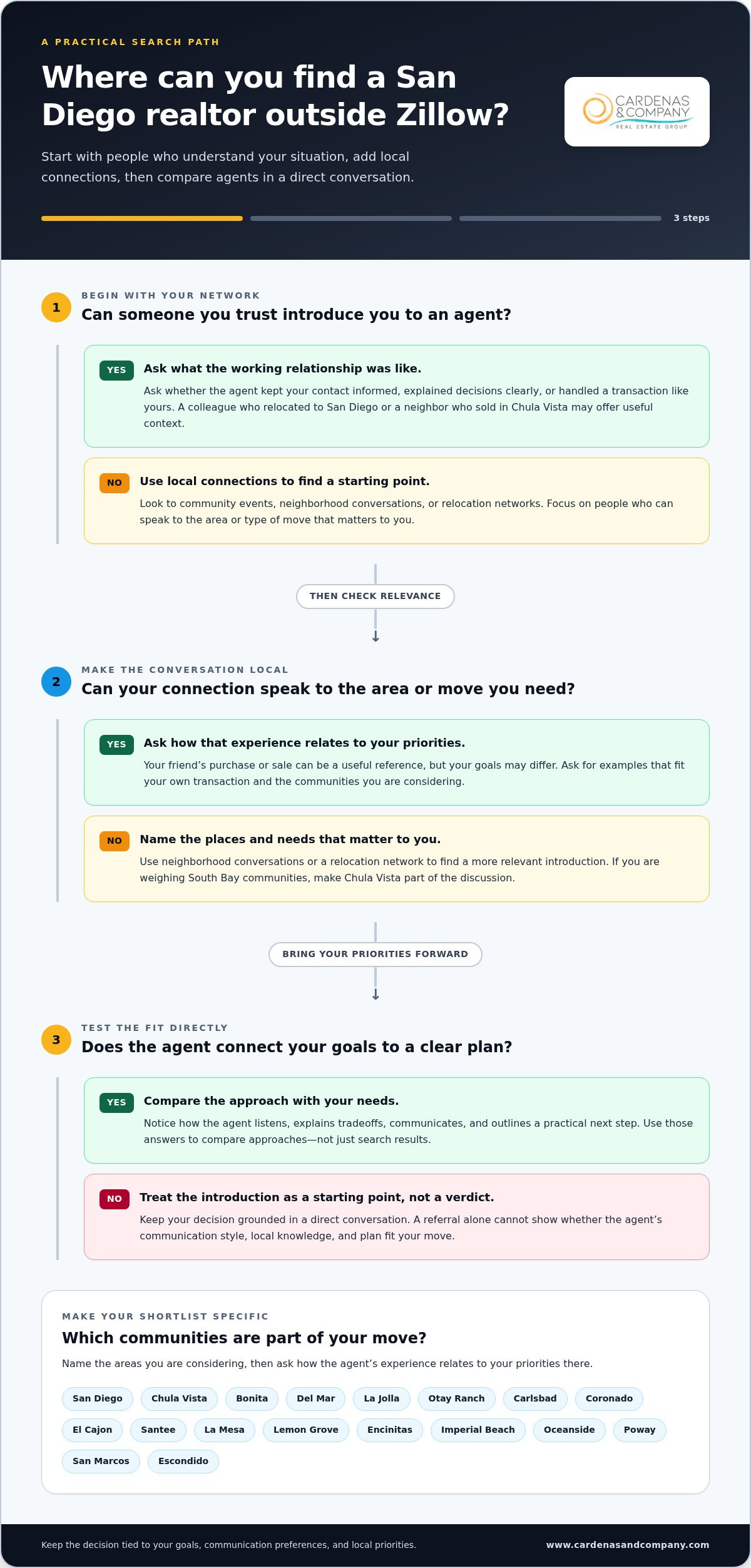
Use a simple sequence: start with people who understand your situation, add local community connections, then speak directly with the agents those conversations surface. This gives you context beyond a name and keeps the decision in your hands.
- Start with a trusted introduction. Ask someone familiar with your move, neighborhood, or transaction goals whether they can connect you with an agent. A friend who recently sold a home may have useful perspective, but their priorities may differ from yours.
- Look for local connections. Community events, neighborhood conversations, and relocation networks can introduce you to professionals familiar with parts of San Diego County. Focus on people who can speak to the area or type of move that matters to you.
- Have a direct conversation. Explain what you’re planning and ask how the agent would approach it. Pay attention to how they communicate, what they want to understand about your goals, and whether they outline a practical next step.
How can your local network introduce you to an agent?
Ask people who know your circumstances, such as a colleague who relocated to San Diego or a neighbor who recently sold in Chula Vista. Find out what they valued about the agent’s working style: clear updates, thoughtful explanations, or familiarity with the kind of transaction they completed.
Then speak with the agent yourself. A referral gives you a reason to start a conversation, not a reason to skip one. Look for details you can apply to your plans, not a borrowed verdict.
How can San Diego community knowledge narrow your search?
Community events and neighborhood conversations can help you understand which local priorities to ask about, from daily routines to access to the places you need. As you compare areas, a San Diego community guide can help you organize questions about the locations you’re considering.
If your plans include the South Bay, make the conversation specific to the communities you’re weighing, including Chula Vista. For a military move, an introduction through a relocation network can lead to a practical discussion about your timing, household needs, and destination. A useful introduction gets you to a more relevant conversation; it doesn’t make the choice for you.
San Diego County offers many distinct communities to consider, including San Diego, Chula Vista, Bonita, Del Mar, La Jolla, Otay Ranch, Carlsbad, Coronado, El Cajon, Santee, La Mesa, Lemon Grove, Encinitas, Imperial Beach, Oceanside, Poway, San Marcos, and Escondido. Name the areas that matter to your plans and ask how an agent’s experience relates to your priorities in those places.
Once you have a name, use the California Department of Real Estate as an official source for information about real estate professionals and license verification. That’s separate from assessing communication and local fit, but it gives you a government source to consult as you gather information.
This is a practical way to approach how to find a realtor not on Zillow in San Diego: use introductions to expand your options, then make your own assessment through direct discussion. If you want to understand how a local team approaches buyer or seller representation, start a conversation with Cardenas & Company Real Estate Group.
How do you compare San Diego realtors once you meet?
Use the same criteria and questions with each agent you speak with. That gives you a fairer comparison, whether one name came from a personal introduction and another from an online profile. You don’t need a perfect scorecard. You need clear evidence about how each person’s approach fits your plans.
Choosing outside Zillow can feel less objective if you’re used to comparing profiles side by side. Make the process more consistent by asking each agent about the same four areas, then noting whether their answers include relevant examples and a practical next step.
| What to compare |
What to listen for |
| Local knowledge |
Specific insight about the San Diego communities you’re considering and how your priorities shape the search or sale. |
| Communication |
A clear explanation of how you’ll receive updates, which channels you’ll use, and what to expect between major decisions. |
| Strategy |
A plan tied to your goals, with reasons for the proposed steps and an honest account of tradeoffs. |
| Transaction experience |
Relevant examples involving buying, selling, investing, or military relocation, depending on your needs. |
Useful agent comparisons assess both relevant experience and the plan for your particular situation. Confidence can make a first impression, but specifics help you judge whether an answer is useful. If you hear a broad promise, ask what it means for your transaction.
Which questions reveal an agent’s approach?
Describe your goals in plain terms, then ask how the agent would approach them. If you’re buying, ask how they’d help you compare the communities you’re considering. If you’re selling, ask how they’d develop a plan for your property. Also ask how often you’ll receive updates and whether you’ll communicate by phone, email, or text.
Pay attention to how the agent connects local knowledge to your priorities. A useful answer about San Diego should address the specific communities and needs you raised, not simply list familiar place names. Clear explanations help you see how the proposed approach relates to your move.
How should you weigh reviews, experience, and personal fit?
Reviews can show how other people describe their experience, but they can’t tell you everything about the service you’ll receive. Consider them alongside examples that match your transaction. Experience with a sale may be relevant to your listing, while a planned military relocation calls for a conversation about your relocation needs.
Each factor has limits. A strong review doesn’t guarantee that someone’s communication style suits you, and a relevant transaction history doesn’t guarantee a particular result. You can also consult the San Diego Association of REALTORS® REALTOR® Code of Ethics as a reference for professional conduct. Compare the evidence, ask follow-up questions, and choose an approach you understand and can work with.
If you’re using how to find a realtor not on Zillow in San Diego as your starting point, this comparison turns a list of names into a decision grounded in your needs. Keep your notes simple: record what each agent understood, what they proposed, and what you still need clarified.
How can you make the search specific to your San Diego move?
Before you contact an agent, define what you need help with: buying, selling, relocating, or exploring an investment. Your transaction type changes the questions worth asking, and the locations you’re considering shape what local knowledge matters. “San Diego” is a broad starting point; your priorities may differ if you’re focused on Chula Vista or another South Bay community.
Prepare a short note for each conversation. Include your preferred communities, main goals, timing, and questions. This helps the agent respond to your actual move rather than offer a general pitch about the region.
What should you prepare before contacting an agent?
Keep the preparation practical. If you’re buying, write down the areas you’re considering and the factors that will guide your decision, such as commute, household needs, or investment objectives. If you’re selling, identify your priorities for the sale and what you need from the process. You don’t need to make assumptions about your home’s price before speaking with an agent.
- Your preferred communities, including whether you’re considering San Diego, Chula Vista, or the South Bay.
- Your main goal: purchase, sale, relocation, or investment exploration.
- Your timing and any circumstances that could affect it.
- The questions you want an agent to answer about local experience and approach.
For a military household, include your relocation circumstances and timing in the first discussion. A PCS move can bring practical considerations that differ from a local purchase or sale, so explain what you know about your plans and what remains unsettled. The San Diego military relocation guide can help you identify topics to raise.
How can you tell whether local knowledge fits your plans?
Ask the agent to connect their experience to the places and transaction type you named. If you’re weighing Chula Vista against another South Bay location, listen for an explanation that addresses your stated priorities, not a broad claim of serving all of San Diego. For a sale, ask how local insight would inform the proposed approach to your property and goals.
A useful first meeting connects local context to the details of your move. You should leave understanding how the agent’s knowledge relates to your priorities, what they would address next, and where you still need answers. That clarity matters whether you’re buying a home, preparing a listing, relocating, or considering an investment.
Defining your needs first also makes how to find a realtor not on Zillow in San Diego a more focused search. You can compare introductions and conversations against real priorities instead of choosing from names alone.
Discuss your San Diego real estate goals
How can Cardenas & Company help you find the right next step?
If you want to understand how a local team works before choosing representation, start with a conversation about your plans. Cardenas & Company Real Estate Group is a San Diego team affiliated with Realty ONE Group Pacific. Explain what you’re planning and hear how the team approaches the needs of your move.
Your next step depends on the transaction. If you’re buying, discuss buyer representation and the communities that fit your priorities. If you’re selling, talk through residential listing services and what you want to accomplish with the sale. If you’re planning a military relocation, bring your timing and household circumstances into the conversation so it reflects your situation.
What can you discuss in an initial conversation?
Start with the basics: are you buying, selling, relocating, or evaluating a real estate investment? Then share the locations you’re considering, such as San Diego, Chula Vista, or the South Bay, along with your goals and main questions. Specific details help you hear an approach that relates to your plans rather than a general description of the region.
You can also describe how you prefer to communicate and what you need to understand before making decisions. A useful conversation gives you room to explain your priorities and hear how the team would think through them. It should help you assess whether the communication and strategy feel clear, without asking you to commit before you’re ready.
- For a purchase, describe the areas and priorities shaping your search.
- For a sale, explain what matters most to you about the listing and the process.
- For a relocation, share the timing and circumstances affecting your move.
Cardenas & Company works with families and military households across San Diego, Chula Vista, the South Bay, and greater Southern California. If you’re exploring an investment, you can discuss your goals through the team’s real estate investment consulting work. You can also ask how percentage-based commissions and brokerage transaction fees apply to a transaction, including what the fees cover and when they are settled. The conversation helps you assess whether the team’s approach aligns with your needs; it does not promise a particular result.
Bottom Line
Zillow can remain one place to discover real estate professionals. Direct conversations add information a profile can’t fully convey: how someone listens to your priorities, explains a plan, and relates local knowledge to your move.
Define your priorities, speak with the team, and decide whether the fit feels right. If you’re exploring how to find a realtor not on Zillow in San Diego, include Cardenas & Company in your conversations and take the time you need to make a considered decision.
If you’d like to talk through your goals and local plans, you’re welcome to reach out when it suits you. Cardenas & Company Real Estate Group is affiliated with Realty ONE Group Pacific and offers residential listing, buyer representation, military relocation, and real estate investment consulting services.
Start a conversation about your real estate plans
Make your next conversation count
Your first conversation doesn’t need to settle every detail. It should help you decide whether you feel heard, understand the proposed next step, and can speak openly about the questions still on your mind. Give yourself room to consider what you learn before choosing representation.
Cardenas & Company Real Estate Group is a San Diego team affiliated with Realty ONE Group Pacific. If you’re exploring how to find a realtor not on Zillow in San Diego, include the team in your conversations and discuss whether its approach fits your plans. You don’t need to make an immediate decision.
Talk with our San Diego real estate team about your plans
Your move is personal. Take the next step when you’re ready, with a clearer sense of what you need and the confidence to choose a working relationship that suits you.
Frequently Asked Questions
Can you find a good realtor without using Zillow?
Yes, you can find a realtor without using Zillow. To explore how to find a realtor not on Zillow in San Diego, start with an introduction from someone familiar with your move, a local community connection, or a conversation with a real estate team. No single route establishes fit. Before deciding whether to work together, discuss your goals, preferred communication, relevant experience, and the agent’s proposed approach.
Is it better to find a realtor through a referral or an online directory?
Neither route is automatically better; each gives you different information. A referral can offer personal context about someone’s experience, while an online directory can help you review profiles and reviews in one place. A colleague’s recommendation may explain how an agent handled a relocation, for example, but not whether that approach suits your sale. Use both as starting points, then discuss communication, local knowledge, and strategy directly.
How do you find a realtor in San Diego who knows your neighborhood?
Name the communities relevant to your plans, then ask how the agent’s experience applies to them. If you’re considering Chula Vista, La Jolla, or another area, ask for examples tied to the type of transaction you have in mind. A useful answer connects local context to your priorities and explains its relevance. Neighborhood familiarity can inform a conversation, but it doesn’t guarantee a particular result.
What questions should you ask a realtor before working with them?
Ask how the agent would approach your buying or selling goals, what relevant local experience they bring, and how you’ll communicate during the transaction. Then ask how they would adapt the plan to your priorities. If you’re selling, explain what matters most about the process; if you’re buying, describe the tradeoffs you’re weighing. Clear, specific answers help you assess fit. Broad promises can’t replace a discussion of your circumstances.
Can a military family find a San Diego realtor without Zillow?
Yes. You can seek an introduction through your military community or speak directly with a real estate team about your move. Discuss your circumstances, timing, and destination communities, including any details that could shape your housing plans. A San Diego military relocation guide can help you prepare topics for that conversation and identify the questions you want answered.
How can you tell whether a realtor’s reviews reflect the service you need?
Reviews offer one perspective, but they may describe a different transaction or working style from the one you need. Look for themes that matter to you, such as clear explanations, then discuss your priorities directly. A review about a home purchase, for example, may not address your questions about listing a property. Consider review details alongside your conversation about experience, communication, and the proposed plan.
Disclaimer
The information provided on this blog is for educational and informational purposes only and does not constitute legal, financial, or investment advice. While we strive for accuracy, real estate markets and insurance regulations (including Living Trusts and IUL strategies) are subject to change. David Cardenas (DRE 01862173) is a licensed real estate salesperson; however, this content does not create an agency relationship. Please consult with a qualified attorney or tax professional regarding your specific situation.