
If you’re asking how to prepare for a home inspection San Diego sellers have scheduled, start with three things you can control: access, operating utilities, and useful information about the property. You can’t guarantee a clean report, but you can help the inspector see the home and review relevant records without avoidable obstacles.
An inspection documents the home’s observed condition. It doesn’t promise that every system or surface will look new, and it doesn’t decide by itself how the sale will proceed. Your goal is to make the inspection straightforward and give buyers clear context about known issues and completed repairs.
Use this guide to prepare the property, organize records, and decide how to approach findings. You’ll also find practical ways to coordinate inspection day and discuss next steps with your real estate agent if the report raises concerns.
Key Takeaways
- Use a practical plan for how to prepare for a home inspection San Diego sellers can manage, while keeping expectations realistic about what the inspector may find.
- Check each room and key system for clear access so the inspector can observe the home’s condition.
- Decide whether to address a known issue, document its history, or discuss next steps based on the situation.
- Keep relevant records together and review inspection findings in context before responding.
- Work with your real estate agent to choose a measured path forward if the report raises concerns.
Table of Contents
What Should You Do Before a San Diego Home Inspection?
Before the appointment, focus on access, utilities, property records, and realistic expectations. A useful plan for how to prepare for a home inspection San Diego sellers can follow starts with making the home easy to inspect, not making every surface look new.
Clear paths and available records help the inspector observe the property and understand its history. They can’t control what the inspection reveals or guarantee a sale outcome. For a neutral introduction to the process, see What is a home inspection?
What does preparing for a home inspection actually involve?
Preparation means clearing access to areas and visible systems, keeping utilities operating as arranged for the appointment, and gathering records such as repair invoices or maintenance notes. Tidy spaces enough to reach equipment and service areas; cosmetic perfection isn’t the point. An inspection documents observed conditions, but it doesn’t decide by itself how a sale will proceed.
This guide focuses on you as the seller, preparing the property and its records. If you’re buying, attending the inspection can help you see the inspector’s observations firsthand and ask questions about them.
Which San Diego home details deserve advance attention?
Start with the property’s own history: its age, additions or alterations, maintenance, and repairs you’ve completed. Gather records that explain the work and make a note of known issues that remain unresolved. Don’t assume a detail is unimportant because it looks ordinary, and don’t treat every age-related condition as a defect.
Local setting can provide context, but it isn’t a diagnosis. At a coastal property, for example, salt air may be relevant when considering metal fixtures or HVAC equipment, but it doesn’t mean those items have a problem. In Chula Vista or elsewhere in the South Bay, focus on the home’s actual condition and records rather than assuming every property shares the same inspection concerns.
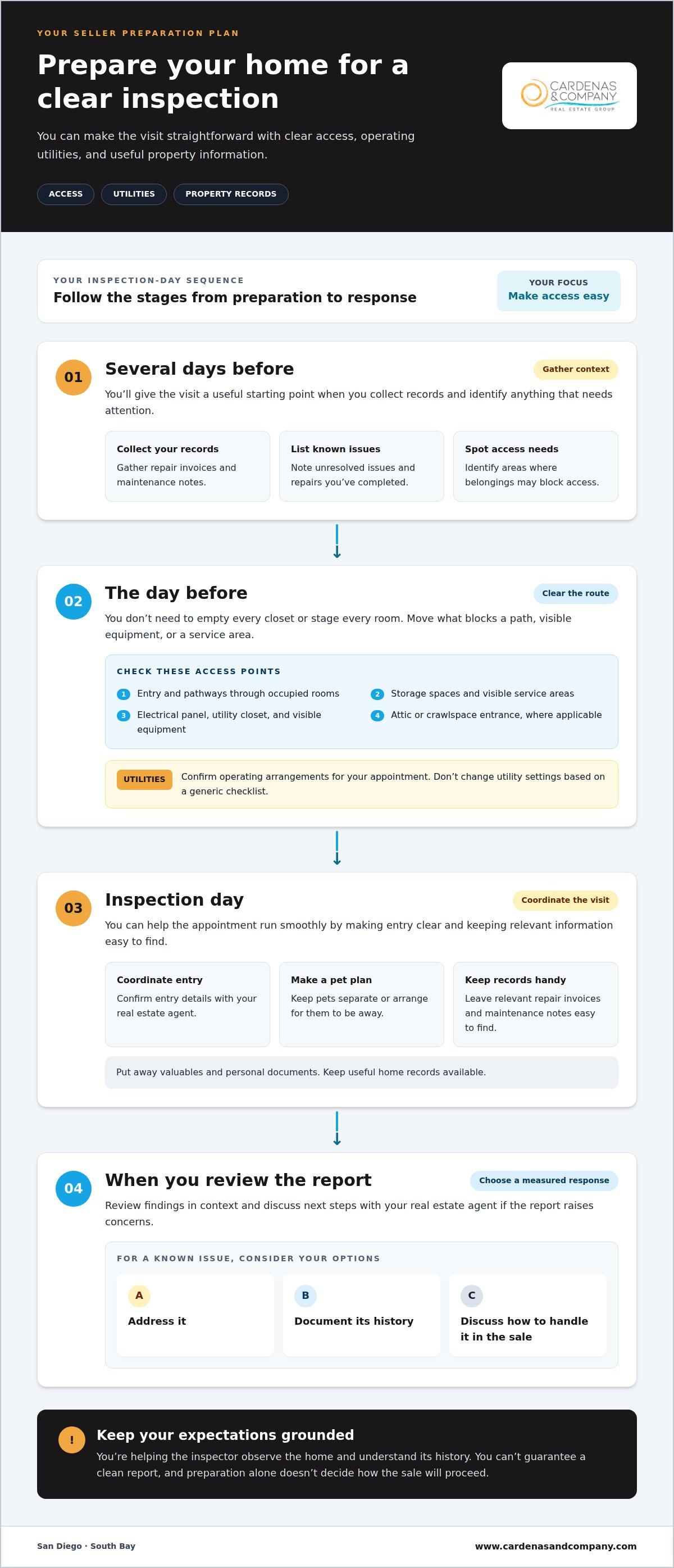
Use this short timeline to keep preparation manageable:
- Several days before: Locate repair and maintenance records, list known issues, and identify areas that need clearing.
- The day before: Clear access to storage areas and visible systems, then confirm utilities are operating as arranged.
- Inspection day: Coordinate entry, secure pets, and leave relevant records easy to find.
These steps give the inspection a clear starting point. They won’t erase normal wear or guarantee a report without findings, but they help you provide access and useful context without trying to present the home as something it isn’t.
How Can You Make Every Area of Your Home Accessible?
Clear access helps the inspector observe visible conditions without moving your belongings or guessing what sits behind them. You don’t need to hide wear or steer the inspection toward a result. Remove practical obstacles and make it easy to reach the areas included in the appointment.
How do you prepare rooms, utilities, and access points?
Walk through the home and check whether belongings block visible equipment, service areas, or access points. Move only what you need to; there’s no need to empty every closet or stage every room. The areas inspectors commonly examine can help you identify where a clear path may be useful.
- Entry and pathways: Make the route into the home and through occupied rooms easy to walk. Move shoes, boxes, and other items that obstruct passage or a clear view.
- Storage areas: Move belongings away from visible equipment or service areas in closets, the garage, and other storage spaces. You don’t need to reorganize items that don’t block access.
- Visible systems: Clear stored items from the electrical panel, utility closet, and other visible equipment. If you know where a control or access point is, leave a simple note or share that information through your agreed communication plan.
- Attic and crawlspace access: Keep the entrance reachable and move items that block it. The property and appointment arrangements may affect which areas the inspector can access.
Don’t assume one utility setup applies to every inspection. Confirm access and operating arrangements for your appointment, and don’t change utility settings based on a generic checklist.
What should you do with pets and personal belongings?
Make a safe plan for pets and household members during the appointment. Keep pets in a separate area or arrange for them to be away from the home, so the inspector can move through the agreed inspection areas without interruption.
Put away valuables and personal documents, but keep relevant home records available. Repair invoices and maintenance notes can add useful context; private papers and valuables don’t need to be part of the inspection. Prioritize clear paths over cleared countertops.
Coordinate entry details with your real estate agent before the appointment. A clear plan supports an orderly visit, but it doesn’t limit what the inspector may observe or guarantee a particular report. If you’re planning a sale in San Diego or the South Bay, review your home-selling next steps with Cardenas & Company Real Estate Group.
Should You Repair, Disclose, or Simply Document a Known Issue?
A known issue calls for a clear decision, not a cover-up. You can address it, keep records that explain its history, or discuss how to handle it as part of the sale. None of these choices guarantees a particular inspection result or a buyer’s response.
As you consider how to prepare for a home inspection San Diego sellers can separate practical property decisions from legal questions. Your real estate agent can help organize information and plan a response to findings. For advice about your legal obligations, speak with a qualified legal professional. The National Association of REALTORS® also offers home inspection tips for sellers.
When might a repair before inspection make practical sense?
Consider a repair when you know there’s an active leak, a safety concern, or a system that isn’t working as expected. Weigh the condition, timing, and information you have about the home. This is a practical framework, not a statement that a specific repair is legally required.
If you complete work, gather available invoices, warranties, and service records in one place. Those records can explain what you addressed and when, but they don’t guarantee the inspector will report no further concerns.
How can you handle a known issue honestly?
Use plain, accurate notes to describe what you know: what happened, what work you completed, and whether anything remains unresolved. Don’t present an assumption as a confirmed repair or conceal a condition to influence what the inspector sees. Your agent can help organize the information and discuss possible next steps without predicting how a buyer will respond.
| Option |
When it may fit |
What to keep in mind |
| Repair before inspection |
You’ve identified an active leak, safety concern, or malfunction and decide to address it. |
Keep available records; the inspection may still note related conditions. |
| Document for context |
You have records of past work or useful information about an issue’s history. |
Share what the records show, without overstating what they prove. |
| Discuss next steps |
You’re unsure whether to repair now or how to respond to an unresolved concern. |
Review the situation with your agent; seek qualified legal advice for legal questions. |
Your inspection decisions are part of the wider sale plan. Review this San Diego home-selling strategy and consider how repairs, records, and timing fit together. Clear information supports a more grounded conversation, but preparation can’t promise a clean report or a specific transaction outcome.
What Should You Prepare for Inspection Day and the Report?
Keep inspection day straightforward: coordinate entry, make sure the inspector can reach the agreed areas, and put useful home records in one place. This final step in how to prepare for a home inspection San Diego sellers can take keeps information accessible. Paperwork adds context, but it doesn’t replace an inspection or resolve a concern by itself.
What should you have ready when the inspector arrives?
Gather available maintenance, repair, appliance, and improvement records. Group them by topic or date so you can find a roof repair invoice or appliance service record without searching through unrelated paperwork. Records add context; they don’t guarantee that an inspector will reach a particular conclusion.
- Appointment access: Confirm how the inspector will enter and who will coordinate access.
- Practical details: Share known access instructions or the location of controls through the communication channel you’ve agreed to use with your agent.
- Home records: Keep relevant invoices, warranties, and maintenance notes together and easy to locate.
- Contact plan: Make sure you and your agent know how to reach each other during the appointment if a question comes up.
Keep the process practical. A record that says a repair was completed can explain the work, but it doesn’t substitute for what the inspector observes or settle a concern on its own.
How should you respond after receiving an inspection report?
Read the report carefully before deciding what to do. Separate questions about facts, such as whether a repair date or system description needs clarification, from decisions about how you want to respond in the transaction. A reported observation isn’t automatically an instruction to make a repair, and it doesn’t dictate what the other party will accept.
Share your questions and supporting records with your seller’s real estate representative. Your agent can help organize the information and communicate your response without promising an outcome. If a question calls for legal advice, take it to a qualified legal professional.
If you’re preparing as a buyer rather than a seller, you can find more San Diego home-buying articles to help you plan your next steps.
Discuss your San Diego home-selling plans
Bottom Line: Prepare Your San Diego Home With a Clear Plan
Your preparation plan is straightforward: clear access, gather relevant records, share honest context, and consider findings carefully before you respond. Those steps can make the inspection more orderly, but they can’t guarantee a clean report or determine how the sale will proceed.
What should you remember before the inspector arrives?
Every San Diego home has its own maintenance history and inspection context. Records for a home in Chula Vista may tell a different story from those for a property elsewhere in the South Bay, even when the homes share similar features. Use a checklist to stay organized, not as a substitute for a qualified inspection or legal advice.
Keep your response measured. A report observation is information to understand and discuss, not an automatic instruction to repair or an outcome you must accept without review. Base your next step on the property, available records, and your sale timeline.
How can a real estate team support your next step?
Your real estate representative can help coordinate timing, organize communications, and consider how an inspection response fits your selling plan. Christian Cardenas has been active in the San Diego real estate market since approximately 2015, and Cardenas & Company Real Estate Group operates under Realty ONE Group Pacific.
If you’re working through how to prepare for a home inspection San Diego sellers can approach with confidence, focus on access, records, and clear communication. You don’t need to make the home appear perfect. You need a practical plan for the home you own and the transaction you’re working toward.
If you’d like to talk through your property, timing, or next steps, you’re welcome to reach out to Cardenas & Company Real Estate Group. The team supports residential sellers in San Diego and nearby communities, including Chula Vista, Bonita, Del Mar, La Jolla, Otay Ranch, Carlsbad, Coronado, El Cajon, Santee, La Mesa, Lemon Grove, Encinitas, Imperial Beach, Oceanside, Poway, San Marcos, and Escondido. There’s no pressure to make a decision before you’re ready.
Discuss your San Diego home-selling plans
Move Forward With a Clear Inspection Plan
Your plan is simple: make access straightforward, organize relevant records, and share accurate context about your home. Preparation can support an orderly inspection, but it can’t guarantee a clean report or determine how the sale will proceed.
Your property’s maintenance history, timeline, and next steps matter. Christian Cardenas has been active in the San Diego real estate market since approximately 2015, and Cardenas & Company Real Estate Group serves San Diego and South Bay communities, including Chula Vista. The team operates under Realty ONE Group Pacific.
Bottom Line
Use the inspection to understand your home’s observed condition and make measured decisions that fit your selling plans. You can discuss your next steps with Cardenas & Company Real Estate Group without pressure.
Talk through your home-selling plans with Cardenas & Company Real Estate Group
Frequently Asked Questions
How do I prepare my house for a home inspection in San Diego?
Start by clearing access to visible systems and service areas, coordinating entry, and gathering records about maintenance or repairs. A practical plan for how to prepare for a home inspection San Diego sellers can use also includes securing pets and sharing accurate information about known work or unresolved concerns. Whether your home is in San Diego, Chula Vista, or Bonita, focus on its condition and history, not cosmetic perfection.
Should I be present during a home inspection as the seller?
You don’t need to assume you must stay during the inspection. Coordinate access and communication with your real estate representative, then follow the appointment arrangement you’ve made. If you attend, give the inspector room to work and use your agreed communication plan for questions. Your presence won’t control what the inspector observes, and you can review the report afterward even if you aren’t there.
What should I fix before a home inspection?
Prioritize conditions you already know about, such as an active leak, a safety concern, or a system that isn’t working as expected. Weigh the condition, timing, and available repair information rather than trying to make every surface look new. Keep invoices, warranties, or service records for completed work. No repair guarantees a particular report, and a checklist can’t determine what’s right for your property.
Do I have to disclose problems found during a home inspection in California?
If you learn about a condition during an inspection, discuss your disclosure obligations with your real estate representative. California disclosure requirements can depend on the facts and your circumstances, so don’t rely on a general checklist to decide what you must disclose. Share the report and relevant records with your representative, and seek qualified legal advice for guidance about your specific obligations.
How long does a home inspection take?
Your inspection’s duration depends on factors such as your property’s size, condition, access, and the appointment’s scope. A home with blocked service areas may require a different approach from one where relevant areas are easy to reach. Coordinate the expected appointment window through your real estate representative, and leave room for timing to vary rather than treating a general estimate as a guarantee.
What happens if a home inspection finds problems?
Review the report, identify questions or factual corrections, and gather records that add context. A finding gives you information to consider; it doesn’t automatically require you to make a repair or decide the sale’s outcome. Discuss possible responses with your real estate representative and consider how each choice fits your transaction. You can’t guarantee the other party’s response, so understand the issue before deciding what to do.
Should I get a pre-listing inspection before selling my San Diego home?
You may use a pre-listing inspection to learn about observed conditions before listing, organize repair records, and consider how findings fit your selling timeline. Weigh the time involved and how you might respond to issues the inspection identifies. A pre-listing inspection can’t guarantee that a later inspection will produce the same observations or that a buyer will accept a particular response. Discuss the tradeoffs with your real estate representative.
Disclaimer
The information provided on this blog is for educational and informational purposes only and does not constitute legal, financial, or investment advice. While we strive for accuracy, real estate markets and insurance regulations (including Living Trusts and IUL strategies) are subject to change. David Cardenas (DRE 01862173) is a licensed real estate salesperson; however, this content does not create an agency relationship. Please consult with a qualified attorney or tax professional regarding your specific situation.